
Πώς το Διπλό Πούλημα Καταστρέφει τα Περιθώρια στον Φυσικό Λίθο
Ένας εξαγωγέας φυσικού λίθου με τζίρο €20 εκατ. χάνει €420.600 ετησίως από λανθασμένες κατανομές. Είναι 2,1% των ακαθάριστων εσόδων, εξανεμισμένα. Γιατί συμβαίνει αυτό και πώς η κατανομή σε πραγματικό χρόνο το αποτρέπει.
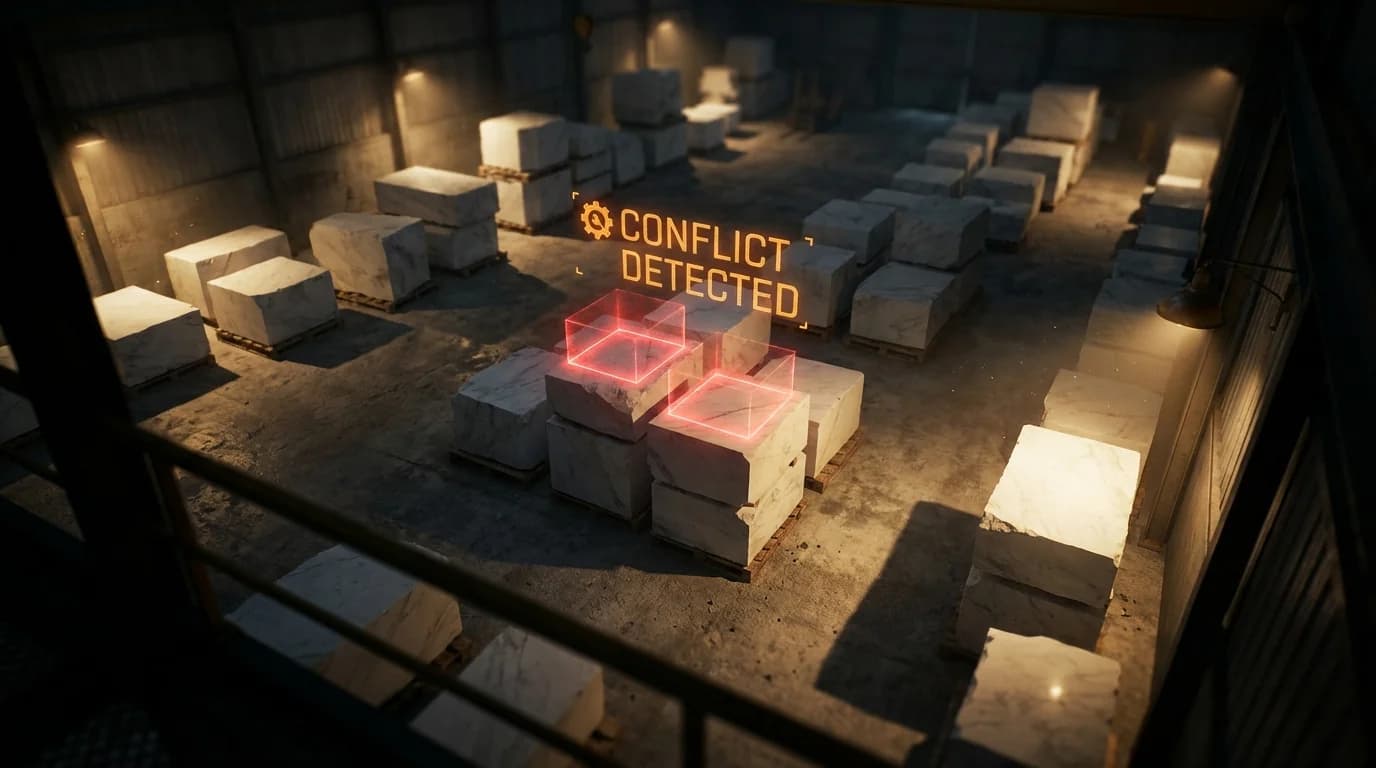
Η κλήση που κανείς δεν θέλει να πάρει
Είναι 7:14 π.μ. στην Αθήνα. Χτυπά το τηλέφωνό σου. Είναι ο συντονιστής logistics στο λιμάνι. Το container των 40 ποδών με προορισμό το Ντουμπάι φορτώνεται στα μισά, και υπάρχει πρόβλημα.
Διακόσια τετραγωνικά μέτρα Calacatta Oro -- Block #992-A έως #992-F -- είχαν υποσχεθεί στην Al-Rashid Group στο Ντουμπάι πριν τρεις μέρες. Ο αντιπρόσωπος πωλήσεών μας στην Αθήνα επιβεβαίωσε την κατανομή τηλεφωνικά και ενημέρωσε το αρχείο Excel. Το υλικό ήταν δεσμευμένο. Η προκαταβολή είχε ληφθεί.
Παρόλα αυτά, είχε επίσης υποσχεθεί στη Marmor Shanghai Ltd. Ο αντιπρόσωπός μας στο Μιλάνο επιβεβαίωσε τα ίδια blocks στη Σαγκάη δύο ημέρες πριν. Έλεγξε ένα διαφορετικό αρχείο Excel -- αυτό στον κοινόχρηστο δίσκο που δεν είχε συγχρονιστεί από την Τρίτη. Είδε τα blocks ως διαθέσιμα. Έστειλε proforma τιμολόγιο. Ο πελάτης από τη Σαγκάη μετέφερε προκαταβολή 30%.
Δύο πελάτες. Δύο προκαταβολές. Ένα σετ από blocks. Μηδέν καλές εκβάσεις.
Αυτό δεν είναι υποθετικό σενάριο. Αυτό είναι πρωί Τρίτης στον κλάδο εξαγωγής φυσικού λίθου.
Ποσοτική εκτίμηση της ζημίας
Το άμεσο κόστος αυτής της συγκεκριμένης σύγκρουσης είναι εύκολο να υπολογιστεί. Χρειάζεται να εξεύρεις υλικό αντικατάστασης για έναν από τους δύο πελάτες. Εκτακτή ναυτιλία. Μερική επιστροφή χρημάτων για τη διαφορά τιμής εάν το υλικό αντικατάστασης είναι κατώτερης ποιότητας. Ασφαλιστικές αξιώσεις. Νομική έκθεση εάν το συμβόλαιο ανέφερε συγκεκριμένους αριθμούς block.
Το μέσο κόστος ανά σύγκρουση container: €36.000.
Αυτό το ποσό περιλαμβάνει τη διαφορά κόστους υλικού αντικατάστασης, τα έκτακτα logistics, το διοικητικό κόστος και τον αντίκτυπο στα έσοδα από την πώληση υλικού υποκατάστασης σε έκπτωση για να διατηρηθεί η σχέση.
Αλλά η σύγκρουση container είναι η ορατή ζημία. Είναι η κορυφή του παγόβουνου. Οι πραγματικές απώλειες είναι δομικές, σιωπηλές και αλληλοεπικαλυπτόμενες.
Ένας εξαγωγέας φυσικού λίθου με τζίρο €20 εκατ. χάνει κατά μέσο όρο €420.600 ετησίως από λανθασμένες κατανομές. Αυτό είναι 2,1% των ακαθάριστων εσόδων -- όχι του κέρδους, των εσόδων -- που εξανεμίζεται κάθε χρόνο.
Να από πού προέρχεται αυτό το 2,1%:
- Άμεσες συγκρούσεις διπλού πουλήματος: Αποστολές αντικατάστασης, έκτακτα logistics, ποινές συμβολαίου. Το ποσό των €36.000 ανά περιστατικό, πολλαπλασιασμένο επί τον αριθμό των συγκρούσεων ετησίως.
- Υποβέλτιστη κατανομή: Αποστολή υλικού Grade A σε πελάτες χαμηλού περιθωρίου γιατί κανείς δεν έλεγξε ποιες παραγγελίες είχαν τη μεγαλύτερη δυνατή τιμή. Premium blocks που πηγαίνουν σε πελάτες που θα δέχονταν Grade B.
- Απώλειες από γηρασμένα αποθέματα: Blocks που κάθονται στην αποθήκη για 90+ ημέρες γιατί η ομάδα πωλήσεων δεν ξέρει ότι υπάρχουν. Η πέτρα υποτιμάται 15-20% ανά τρίμηνο στην αποθήκευση. Δεσμευμένο κεφάλαιο σε υλικό που κανείς δεν πουλά.
- Υποαξιοποίηση container: Containers που φορτώνονται στο 75-80% της χωρητικότητάς τους επειδή αυτός που κάνει την κατανομή δεν μπορεί να βλέπει όλες τις αποθήκες ταυτόχρονα. Κάθε ποσοστιαία μονάδα αδιάθετου χώρου container είναι χρήμα που αποστέλλεται σαν αέρας.
- Βλάβη στις σχέσεις: Ο πελάτης που έλαβε λάθος υλικό, ή υποκατάστατο, ή καθυστερημένη παράδοση. Δεν σου στέλνει λογαριασμό για την απώλεια εμπιστοσύνης. Απλώς σταματά να τηλεφωνεί.
Γιατί συμβαίνει: η αρχιτεκτονική της αποτυχίας
Ο κλάδος φυσικού λίθου λειτουργεί με τεχνολογία που ήταν αιχμή το 2004.
Αρχεία Excel. Κάθε αντιπρόσωπος πωλήσεων διατηρεί το δικό του. Κάποιοι χρησιμοποιούν κοινόχρηστους δίσκους. Κάποιοι χρησιμοποιούν Dropbox. Κάποιοι χρησιμοποιούν την έκδοση που έστειλαν στον εαυτό τους με email την περασμένη Πέμπτη. Κανένα από αυτά τα αρχεία δεν ενημερώνεται σε πραγματικό χρόνο. Κανένα δεν επικοινωνεί με τα άλλα. Όταν ο αντιπρόσωπος στην Αθήνα δεσμεύει το Block #992-A στο υπολογιστικό φύλλο του, το υπολογιστικό φύλλο του αντιπροσώπου στο Μιλάνο δεν το γνωρίζει.
WhatsApp. Το de facto επικοινωνιακό εργαλείο του κλάδου. "Είναι το block 992 διαθέσιμο;" -- σταλμένο σε ομαδική συνομιλία με 14 άτομα στις 6:47 μ.μ. όταν τρεις από αυτούς έχουν ήδη φύγει από το γραφείο. Η απάντηση έρχεται στις 8:22 μ.μ.: "Νομίζω ναι." Όχι "ναι." Όχι "επιβεβαιωμένο." "Νομίζω ναι."
Τηλεφωνικές κλήσεις. Η έσχατη λύση. Καλέσε τον Αχμέτ στην αποθήκη. Ο Αχμέτ οδηγεί. Τηλεφώνησε ξανά σε μια ώρα. Μέχρι να επιβεβαιώσει ο Αχμέτ τη διαθεσιμότητα, δύο πελάτες έχουν ήδη ακούσει για την ίδια πέτρα.
Καμία ενιαία πηγή αλήθειας. Αυτή είναι η βαθύτερη αιτία. Δεν υπάρχει κανένα σύστημα όπου κάθε αντιπρόσωπος πωλήσεων, σε κάθε γραφείο, σε κάθε ζώνη ώρας, να βλέπει την ίδια κατάσταση αποθέματος σε πραγματικό χρόνο. Δεν υπάρχει σύστημα που να αποτρέπει δύο άτομα να δεσμεύουν ταυτόχρονα το ίδιο block. Δεν υπάρχει σύστημα που να ειδοποιεί ακόμη και αν υπάρχει σύγκρουση.
Το πρόβλημα κλιμακώνεται γραμμικά με την επιτυχία. Περισσότεροι πελάτες σημαίνει περισσότεροι αντιπρόσωποι πωλήσεων, άρα περισσότερα υπολογιστικά φύλλα, άρα περισσότερες ομάδες WhatsApp, άρα περισσότερες συγκρούσεις. Οι εξαγωγείς λίθου με τον ταχύτερο ρυθμό ανάπτυξης είναι εκείνοι που εκτίθενται περισσότερο σε απώλειες από λανθασμένες κατανομές.
Η αλυσιδωτή επίδραση
Ένα μεμονωμένο περιστατικό διπλού πουλήματος δεν τελειώνει όταν εξευρεθεί το υλικό αντικατάστασης. Συνεχίζεται αλυσιδωτά.
Άμεση αλυσιδωτή επίδραση (Εβδομάδα 1):
- Πρέπει να εξευρεθεί υλικό αντικατάστασης, συχνά σε υψηλότερο κόστος
- Η έκτακτη ναυτιλία κοστίζει 2-3 φορές τα κανονικά ναύλα
- Διοικητικό κόστος: αναθεωρημένα τιμολόγια, ενημερωμένα τελωνειακά έγγραφα, επαναδιαπραγμάτευση προγραμμάτων παράδοσης
- Ένας από τους δύο πελάτες λαμβάνει ειδοποίηση καθυστέρησης
Βραχυπρόθεσμη αλυσιδωτή επίδραση (Μήνες 1-3):
- Ο επηρεαζόμενος πελάτης ζητά έκπτωση στην επόμενη παραγγελία ως αποζημίωση
- Ο αντιπρόσωπος πωλήσεων χάνει την εμπιστοσύνη του και αρχίζει να επικοινωνεί υπερβολικά για τη διαθεσιμότητα, επιβραδύνοντας ολόκληρο τον κύκλο πωλήσεων
- Η ομάδα της αποθήκης χάνει μισή μέρα για να αναδιοργανώσει το σχέδιο φόρτωσης container
- Τα ασφάλιστρα ενδέχεται να αυξηθούν εάν υποβληθούν αξιώσεις
Μακροπρόθεσμη αλυσιδωτή επίδραση (Έτος 1+):
- Ο πελάτης που αντιμετώπισε πρόβλημα μειώνει τη συχνότητα παραγγελιών κατά 20-30%
- Η είδηση κυκλοφορεί. Στον κλάδο του λίθου, η φήμη ταξιδεύει πιο γρήγορα από τα containers. Ένας αγοραστής στο Ριάντ μαθαίνει για τη σύγκρουσή σου στο Ντουμπάι από μια συνομιλία σε εμπορική έκθεση
- Οι καλύτεροι αντιπρόσωποί σου -- αυτοί που φέρνουν τα μεγαλύτερα έσοδα -- είναι οι πιο απογοητευμένοι. Είναι αυτοί που δέχονται τις οργισμένες κλήσεις. Αρχίζουν να κοιτούν ανταγωνιστές.
Για έναν εξαγωγέα €20 εκατ. που διαχειρίζεται 15-20 συγκρούσεις container ετησίως, η συσσωρευτική ζημία ανέρχεται σε εκείνο το ετήσιο 2,1%. Και μεγαλώνει κάθε χρόνο που το πρόβλημα παραμένει άλυτο.
Η λύση: κατανομή σε πραγματικό χρόνο με ανίχνευση συγκρούσεων
Η τεχνολογία για την εξάλειψη του διπλού πουλήματος υπάρχει. Δεν είναι πειραματική. Είναι λειτουργική.
Η λύση απαιτεί τρεις δυνατότητες να λειτουργούν συνδυαστικά:
1. Ενιαία, σε πραγματικό χρόνο κατάσταση αποθέματος. Κάθε block, σε κάθε αποθήκη, ορατό από κάθε αντιπρόσωπο πωλήσεων, ενημερωμένο σε χιλιοστά του δευτερολέπτου. Όχι κοινόχρηστο υπολογιστικό φύλλο. Όχι συγχρονισμένος φάκελος. Μια live βάση δεδομένων όπου η διαθεσιμότητα αλλάζει τη στιγμή που γίνεται μια δέσμευση.
2. Ανίχνευση συγκρούσεων τη στιγμή της κατανομής. Όταν ένας αντιπρόσωπος πωλήσεων επιχειρεί να δεσμεύσει ένα block, το σύστημα ελέγχει αμέσως όλες τις υπάρχουσες δεσμεύσεις, εκκρεμείς προσφορές και ενεργές παραγγελίες. Εάν υπάρχει σύγκρουση, η κατανομή μπλοκάρεται πριν συμβεί. Όχι μετά τη φόρτωση του container. Όχι μετά την κατάθεση της προκαταβολής από τον πελάτη. Πριν ο αντιπρόσωπος μπορέσει καν να επιβεβαιώσει τη συμφωνία.
3. Έξυπνες προτάσεις εναλλακτικών επιλογών. Όταν ανιχνεύεται σύγκρουση, το σύστημα δεν λέει απλώς "όχι." Προτείνει εναλλακτικές -- blocks με παρόμοιες διαστάσεις, ποιότητα, χρωματικό προφίλ και σχέδιο νερών -- κατατεταγμένα κατά βαθμό αντιστοίχισης. Ο αντιπρόσωπος επιλύει τη σύγκρουση σε δευτερόλεπτα, όχι ημέρες.
Αυτό σημαίνει στην πράξη η O(1) ανίχνευση συγκρούσεων. Το σύστημα ελέγχει για συγκρούσεις σε σταθερό χρόνο, ανεξάρτητα από το μέγεθος του αποθέματος. Είτε έχεις 500 blocks είτε 50.000, ο χρόνος ανίχνευσης είναι ο ίδιος: κάτω από ένα χιλιοστό του δευτερολέπτου.
Σε συνδυασμό με αυτόματα λήγουσες δεσμεύσεις (blocks που επιστρέφουν στο διαθέσιμο απόθεμα εάν μια συμφωνία δεν επιβεβαιωθεί εντός 24-72 ωρών) και ένα πλήρες ίχνος ελέγχου (κάθε δέσμευση, τροποποίηση και αποδέσμευση καταγεγραμμένη με χρονική σήμανση και χρήστη), η αρχιτεκτονική εξαλείφει όχι μόνο το διπλό πούλημα, αλλά ολόκληρη την κατηγορία απωλειών από λανθασμένες κατανομές.
Τα νούμερα που μετράνε
Για εξαγωγέα με τζίρο €20 εκατ.:
| Δείκτης | Τιμή |
|---|---|
| Ετήσια απώλεια από λανθασμένες κατανομές | €420.600 |
| Απώλεια ως ποσοστό εσόδων | 2,1% |
| Μέσο κόστος ανά σύγκρουση container | €36.000 |
| Allocator ROI | 32:1 |
| Περίοδος αποπληρωμής | 11 ημέρες |
| Χρόνος ανίχνευσης και επίλυσης σύγκρουσης | < 200 χιλιοστά δευτερολέπτου |
Το ερώτημα δεν είναι εάν μπορείς να αντέξεις οικονομικά να εφαρμόσεις κατανομή σε πραγματικό χρόνο. Το ερώτημα είναι εάν μπορείς να αντέξεις άλλον ένα χρόνο με €420.600 σε αποτρέψιμες απώλειες.
Κάθε μέρα χωρίς ανίχνευση συγκρούσεων είναι μια μέρα που δύο από τους αντιπροσώπους πωλήσεών σου μπορούν να υποσχεθούν την ίδια πέτρα σε δύο διαφορετικούς πελάτες. Η πιθανότητα δεν είναι μηδέν. Για έναν πολυάσχολο εξαγωγέα με 5+ ενεργούς αντιπροσώπους πωλήσεων σε πολλαπλές ζώνες ώρας, είναι σχεδόν βεβαιότητα οποιαδήποτε εβδομάδα.
Επόμενα βήματα
Εάν αναγνωρίζεις τα σενάρια αυτού του άρθρου -- τους ελέγχους διαθεσιμότητας μέσω WhatsApp, τα αρχεία Excel που αντιφάσκουν μεταξύ τους, τις συγκρούσεις container που κοστίζουν €36.000 η καθεμία -- τότε ήδη γνωρίζεις το κόστος. Το πληρώνεις.
Το πρώτο βήμα δεν είναι μια αγορά τεχνολογίας. Είναι ένας έλεγχος. Υπολόγισε τις πραγματικές σου απώλειες από λανθασμένες κατανομές τους τελευταίους 12 μήνες. Μέτρα τις συγκρούσεις. Μέτρα τις αποστολές αντικατάστασης. Μέτρα τους πελάτες που μείωσαν τη συχνότητα παραγγελιών τους μετά από ένα περιστατικό. Εφάρμοσε το μέσο κόστος €36.000 ανά σύγκρουση και δες πού βρίσκεται η δραστηριότητά σου σε σχέση με τον δείκτη αναφοράς 2,1%.
Στη συνέχεια, θέσε ένα δυσκολότερο ερώτημα: πού θα βρίσκεται αυτός ο αριθμός σε τρία χρόνια εάν η πελατειακή σου βάση αναπτυχθεί κατά 30%;
Η απάντηση θα σου πει ό,τι χρειάζεσαι να γνωρίζεις για την επείγουσα ανάγκη δράσης.