
Come Approvvigionarsi di Marmo Direttamente dalla Cava
Acquistare marmo direttamente dalla cava elimina i margini dei distributori e offre accesso al materiale migliore prima che arrivi sul mercato aperto. Ecco esattamente come funziona il processo.
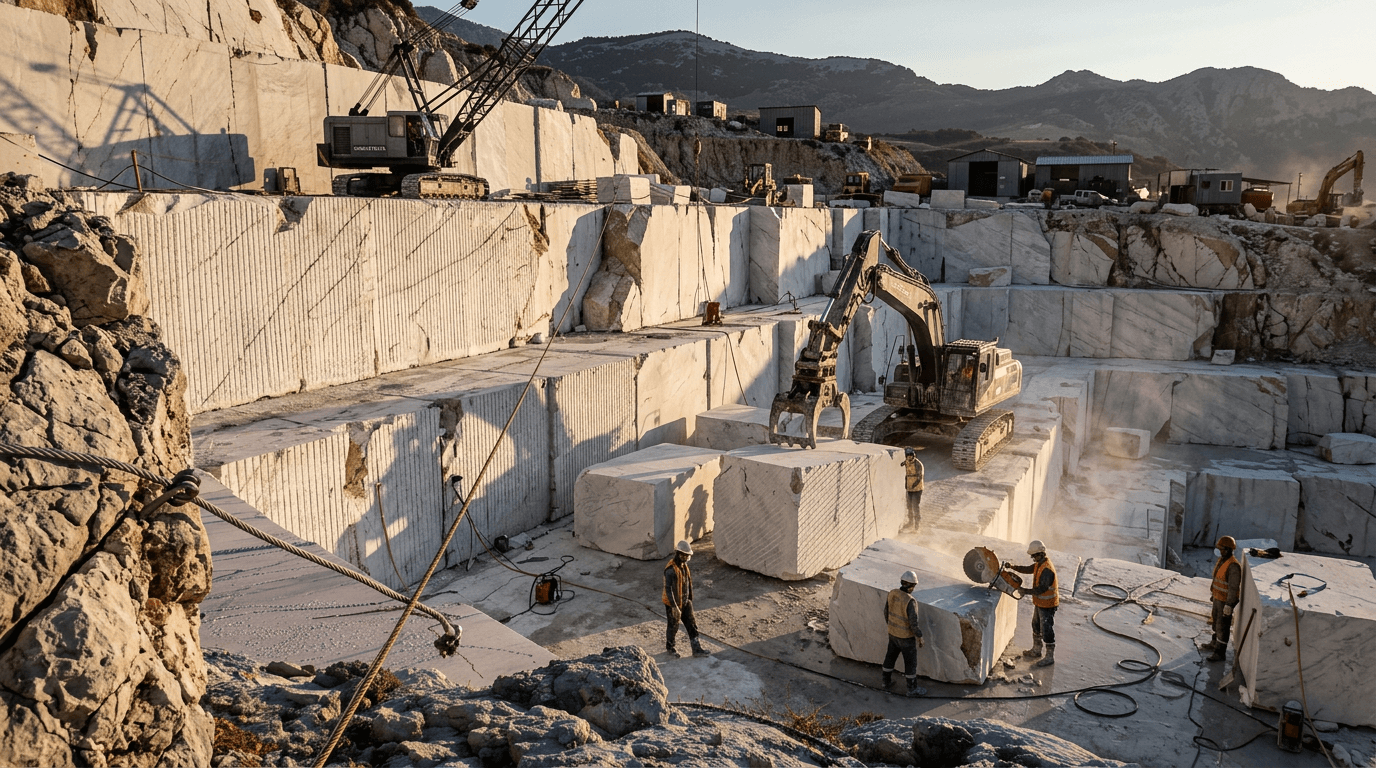
Come Approvvigionarsi di Marmo Direttamente dalla Cava (Guida Passo per Passo)
L'approvvigionamento diretto dalla cava offre agli acquirenti accesso a materiali migliori a prezzi migliori — ma solo se si sa come navigare il processo. Questa guida copre l'intero flusso di lavoro, dall'identificazione della cava giusta alla gestione della logistica del primo container.
Perché approvvigionarsi direttamente dalla cava?
Quando si acquista il marmo attraverso un distributore o una società di trading, si paga il loro margine (tipicamente 30-60% sopra il prezzo FOB), la loro selezione di stock (non l'intera produzione della cava) e i loro tempi (non i propri).
L'approvvigionamento diretto dalla cava elimina questi livelli. I vantaggi:
- Prezzo: Accesso ai prezzi FOB di cava, tipicamente 30-60% al di sotto del dettaglio distributore
- Selezione: Primo accesso ai nuovi lotti di estrazione prima che vengano venduti ai distributori
- Consistenza: Possibilità di selezionare e riservare interi blocchi o fascioni per la coerenza cromatica del lotto di progetto
- Tracciabilità: Documentazione di origine diretta per la conformità al Passaporto Digitale del Prodotto EU e alle certificazioni per l'edilizia sostenibile
Il compromesso: maggiore complessità. Gestire la logistica, la verifica qualitativa e il rapporto commerciale è responsabilità dell'acquirente.
Passo 1: Definire con precisione le proprie specifiche
Prima di contattare qualsiasi cava, occorre una specifica precisa. Richieste vaghe ("marmo bianco, buona qualità") fanno perdere tempo a tutti.
Una specifica corretta include:
- Tipologia e varietà di pietra: es. "Calacatta Oro" o "Bianco Carrara CD" — essere specifici
- Gamma cromatica del fondo: es. "Valore L* del fondo superiore a 90, minima tinta grigia"
- Carattere della venatura: Marcata/fine, gamma cromatica (oro/grigio/assente), densità
- Finitura: Lucidata, satinata, spazzolata, sabbiata
- Spessore: Lo standard è 2cm o 3cm; specificare se diverso
- Dimensioni delle lastre: Misura minima richiesta per i pezzi da taglio
- Grado: Commerciale (A/B), Prima Scelta, Extra
- Volume: Quantità minima d'ordine — la maggior parte delle cave non tratta al di sotto di 1-2 container (circa 20-40m2 per fascione, 8-12 fascioni per container)
- Tempi: Quando il materiale deve essere disponibile in cantiere
Passo 2: Identificare le cave che producono il materiale desiderato
Per il marmo italiano (Carrara, Calacatta, Statuario, Botticino):
- Confindustria Marmomacchine (associazione italiana del settore marmifero) mantiene elenchi di cave
- La fiera Marmomacc (Verona, settembre) è il principale evento di approvvigionamento in presenza
- Ricercare su Google "[nome pietra] quarry Italy" per i siti web diretti delle cave — i principali produttori ne dispongono quasi tutti
Per il marmo turco (Afyon White, Mugla, Burdur Beige):
- IMM (Istanbul Marble and Stone Fair) è il principale evento fieristico
- Le cave turche sono generalmente più accessibili agli acquirenti diretti rispetto a quelle italiane
Per il marmo greco (Volakas, Thassos, Penteli, Drama White):
- Associazione degli esportatori di marmo della Grecia settentrionale
- Richieste dirette alle cave per i produttori di Volakas, Drama e Kavala
Per il granito indiano:
- CAPEXIL (Chemical and Allied Products Export Promotion Council) mantiene elenchi di esportatori
- Rajasthan e Andhra Pradesh sono le principali regioni di produzione del granito
Piattaforme digitali: Le piattaforme B2B per il commercio della pietra aggregano gli annunci delle cave e consentono agli acquirenti di filtrare per materiale, origine, grado e prezzo. Sono sempre più utili per il sourcing iniziale e il confronto dei prezzi.
Passo 3: Primo contatto
Quando si contatta direttamente una cava, il primo messaggio stabilisce il tono. Le cave ricevono molte richieste poco serie — una richiesta professionale e specifica ottiene una risposta professionale.
Cosa includere nel primo messaggio:
- Il nome dell'azienda e la natura del business
- La specifica del materiale (dal Passo 1)
- Il volume necessario (minimo e ideale)
- I propri tempi
- Se si è già importato direttamente in precedenza (in caso affermativo, questo aumenta la credibilità)
- I termini di pagamento preferiti (chiedere, non presumere)
Cosa non fare:
- Chiedere il "prezzo migliore" senza fornire le proprie specifiche
- Chiedere campioni prima di essersi qualificati come acquirente serio
- Negoziare il prezzo prima di aver visionato il materiale e concordato i termini
Passo 4: Richiedere campioni e verificare la qualità
Per qualsiasi ordine significativo, richiedere campioni fisici — non fotografie. Le fotografie sono utili per una prima selezione, ma non possono sostituire il vedere e toccare la pietra.
Protocollo standard per i campioni:
- Richiedere 2-3 campioni rappresentativi dello specifico blocco o fascione in esame
- Richiedere campioni "tagliati dallo stock commerciale che verrà fornito" — non pezzi selezionati appositamente
- Verificare: coerenza cromatica con la propria specifica, qualità di finitura, fessure nascoste, precisione di calibratura (tolleranza di spessore)
Per ordini di grandi dimensioni, valutare l'invio di un ispettore qualità in cava o in fabbrica. Ispettori professionisti per la qualità della pietra operano in Italia, Turchia, India, Brasile e nella maggior parte dei principali paesi produttori. Il costo (tipicamente EUR 500-2.000 per visita ispettiva) è minimo rispetto al costo del rifiuto di un container.
Passo 5: Negoziare i termini commerciali
Termini FOB tipici per il marmo italiano e turco:
- Pagamento: 30% di acconto alla conferma d'ordine, 70% prima del carico del container (o contro copia della polizza di carico)
- Tempi di consegna: 4-12 settimane dalla conferma d'ordine, a seconda della finitura e della disponibilità
- Valuta: EUR (Italia, Turchia), USD (India, Brasile, Cina)
- Ordine minimo: Tipicamente 1 container completo (20ft o 40ft a seconda del peso)
Punti chiave di negoziazione:
- Prezzo per m2 (non per pezzo — insistere su questo)
- Totale m2 per container (comprendere le dimensioni dei fascioni e quanti entrano)
- Tolleranza sulle dimensioni (specificare +/-2mm di spessore, +/-5mm di lunghezza/larghezza)
- Politica di sostituzione per i pezzi danneggiati (tipicamente tolleranza del 3-5% di danno, la cava sostituisce oltre questa soglia)
Passo 6: Gestire la logistica
Carico del container:
- La maggior parte delle cave carica su camion pianale; l'acquirente organizza il container
- Un container da 20ft trasporta circa 18-22 tonnellate di pietra
- Un container da 40ft trasporta circa 22-26 tonnellate
- Il marmo è denso — di norma si raggiunge il limite di peso prima di quello volumetrico su un 40ft
Documentazione necessaria:
- Fattura commerciale
- Lista di imballaggio
- Certificato di origine (ai fini daziari EU)
- Polizza di carico
- Documentazione di marcatura CE (per uso edilizio in EU)
- Eventuali certificazioni specifiche della cava (ISO, ambientali, di sostenibilità)
Spedizionieri: Utilizzare uno spedizioniere con esperienza nel settore lapideo. Gli spedizionieri generici a volte gestiscono i fascioni in modo non adeguato. Chiedere esplicitamente la loro esperienza nell'importazione di pietra.
Passo 7: Ispezione qualitativa all'arrivo
Quando arriva il container, ispezionare prima di accettare la consegna:
- Documentare eventuali danni all'imballaggio o ai fascioni prima di firmare la bolla di consegna
- Confrontare i pezzi con la lista di imballaggio
- Verificare a campione dimensioni e finitura sul 10-20% dei pezzi
- Fotografare immediatamente qualsiasi problema
Le controversie sono significativamente più facili da risolvere con prove fotografiche documentate scattate al momento della consegna.
La curva di apprendimento dell'approvvigionamento diretto
La prima importazione diretta sarà più lenta e più impegnativa delle successive. È normale. Dal terzo o quarto acquisto diretto, si saranno stabiliti rapporti consolidati, una catena logistica affidabile e una comprensione calibrata di cosa aspettarsi da ogni cava.
L'economia migliora significativamente con la scala: gli acquirenti che movimentano 10 o più container all'anno da un'unica cava negoziano tipicamente prezzi del 15-25% inferiori rispetto al primo ordine.
Strumenti digitali per l'approvvigionamento in cava
Le moderne piattaforme B2B per la pietra (come NoriaStrata) collegano direttamente acquirenti e cave, forniscono listing di inventario verificati e gestiscono digitalmente la catena documentale e di tracciabilità. Per gli acquirenti che desiderano i prezzi diretti di cava senza gestire ogni relazione manualmente, queste piattaforme comprimono il processo in modo significativo.