
Marmo vs Granito vs Quarzite: Guida alle Specifiche
Un confronto basato sui dati tra le tre pietre naturali più specificate. Include valori di durezza, proprietà termiche, metriche di consistenza cromatica e raccomandazioni applicative per architetti e progettisti.
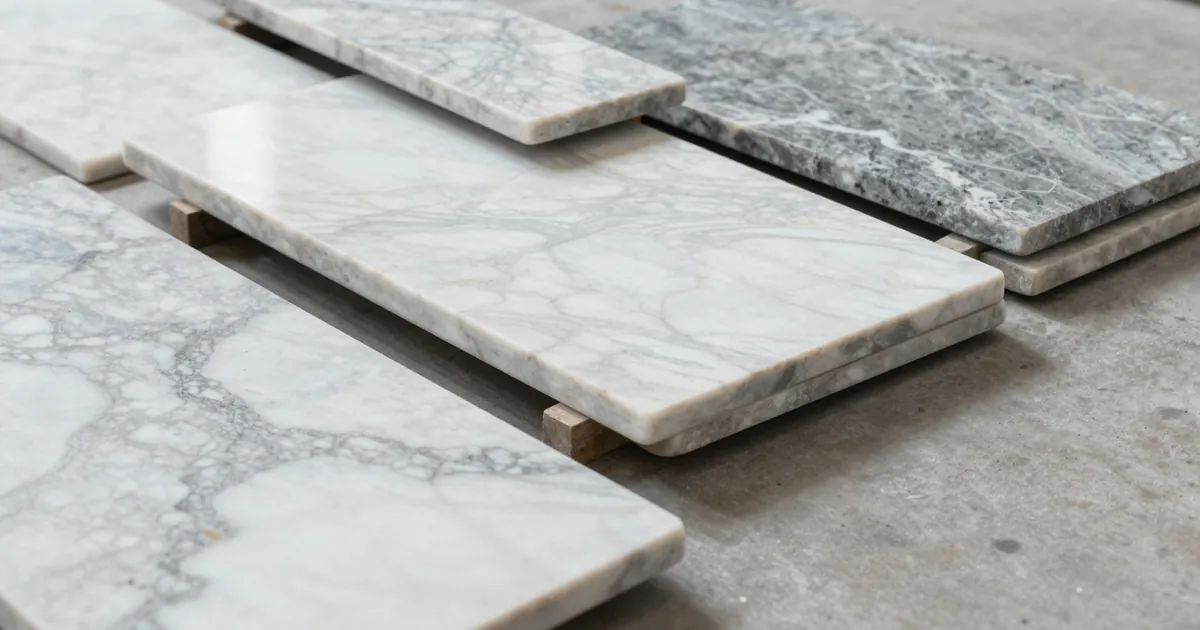
Confronto Rapido
| Proprietà | Marmo | Granito | Quarzite |
|---|---|---|---|
| Durezza Mohs | 3-4 | 6-7 | 7-8 |
| Densità (kg/m³) | 2.500-2.700 | 2.600-2.800 | 2.600-2.700 |
| Assorbimento d'acqua | 0,2-0,5% | 0,1-0,3% | 0,1-0,2% |
| Conducibilità termica | 2,5-3,0 W/mK | 2,5-3,5 W/mK | 5,0-7,0 W/mK |
| Fascia di prezzo (€/m²) | 80-500+ | 60-300 | 100-400 |
| Consistenza cromatica (ΔE) | 2,0-5,0 | 1,5-3,0 | 1,0-2,5 |
Marmo: Eleganza Senza Tempo, con le Dovute Considerazioni
Applicazioni Ideali
- Pavimentazione interna (aree a basso traffico)
- Rivestimenti a parete
- Piani bagno
- Elementi scultorei
- Residenziale di lusso
Specifiche Tecniche
Il marmo è una roccia metamorfica di origine calcarea, composta principalmente da calcite (CaCO₃). La sua durezza relativamente bassa (3-4 Mohs) lo rende suscettibile ai graffi e all'attacco chimico da parte di sostanze acide.
Secondo la norma ASTM C503, il marmo architettonico deve soddisfare i seguenti requisiti:
- Assorbimento: max 0,20% (Classe I) fino a 0,75% (Classe IV)
- Resistenza a compressione: min 52 MPa
- Resistenza a flessione: min 7 MPa
Criticità nella Corrispondenza Cromatica
Il marmo presenta la maggiore variazione cromatica tra le pietre di pregio. I valori Delta-E tra lastre adiacenti possono oscillare tra 2,0 e 5,0, rendendo indispensabile una corrispondenza scientifica del colore per i progetti di grande scala.
L'International Institute of Marble, Stone and Restoration raccomanda di:
- Specificare la tolleranza massima ΔE nei contratti
- Richiedere l'approvazione delle lastre prima della lavorazione
- Documentare i profili cromatici in formato digitale
Requisiti di Manutenzione
- Sigillatura ogni 6-12 mesi
- Utilizzo esclusivo di detergenti a pH neutro
- Pulizia immediata in caso di versamenti
- Levigatura professionale per la rimozione dei graffi
Granito: La Pietra da Lavoro per Eccellenza
Applicazioni Ideali
- Top cucina
- Pavimentazione ad alto traffico
- Rivestimenti per esterni
- Spazi commerciali
- Installazioni outdoor
Specifiche Tecniche
Il granito è una roccia ignea composta principalmente da quarzo, feldspato e mica. La sua elevata durezza (6-7 Mohs) e la bassa porosità lo rendono ideale per applicazioni impegnative.
Secondo la norma ASTM C615, il granito architettonico deve soddisfare:
- Assorbimento: max 0,40%
- Resistenza a compressione: min 131 MPa
- Resistenza a flessione: min 10,34 MPa
Vantaggio nella Consistenza Cromatica
Il granito presenta generalmente una migliore consistenza da lotto a lotto rispetto al marmo, con valori Delta-E di 1,5-3,0 tra lastre provenienti dalla stessa cava. Questo facilita l'abbinamento cromatico per grandi progetti commerciali.
Considerazioni sull'Approvvigionamento per Regione
La guida all'approvvigionamento 2024 del Natural Stone Institute evidenzia:
- Brasile: Motivi esotici, prezzi più elevati
- India: Conveniente, qualità costante
- Cina: Produzione in volumi, qualità variabile
- Italia/Spagna: Gradi premium, disponibilità limitata
Quarzite: Durabilità Massima
Applicazioni Ideali
- Pavimenti commerciali ad alto traffico
- Top cucina (uso intensivo)
- Pavimentazione esterna
- Bordi piscina
- Rivestimenti per caminetti
Specifiche Tecniche
La quarzite è un'arenaria metamorfica composta quasi interamente da quarzo. Con una durezza di 7-8 Mohs, rivaleggia con la pietra ingegnerizzata nella resistenza ai graffi, mantenendo al contempo l'estetica naturale.
Proprietà chiave secondo la norma ASTM C616:
- Assorbimento: max 0,20%
- Resistenza a compressione: min 69 MPa (tipicamente 150-300 MPa)
- Resistenza a flessione: min 6,9 MPa
Distinzione Importante
La vera quarzite viene spesso confusa con la "quarzite tenera" (in realtà marmo o dolomite). Per verificarne l'autenticità:
- Test acido (la vera quarzite non subisce attacco chimico)
- Test di durezza (deve scalfire il vetro)
- Certificazione del fornitore
Colore e Venatura
La quarzite offre un'eccellente consistenza cromatica (ΔE 1,0-2,5) con motivi di venatura d'impatto. Le varietà più richieste includono:
- Taj Mahal (bianchi caldi)
- Sea Pearl (blu/verde)
- Macaubas (bianchi con movimento)
Raccomandazioni per Tipologia di Progetto
Residenziale di Lusso
Primaria: Marmo per le aree di rappresentanza Secondaria: Quarzite per cucine e zone ad alto traffico Motivazione: Priorità estetica con durabilità pratica dove necessario
Uffici Commerciali
Primaria: Granito per hall e aree comuni Secondaria: Quarzite per spazi direzionali Motivazione: Equilibrio tra durabilità e aspetto premium
Hospitality
Primaria: Granito per le zone ad alto traffico Secondaria: Marmo per le suite di lusso Motivazione: Efficienza manutentiva con lusso selettivo
Strutture Sanitarie
Primaria: Solo granito o quarzite Da evitare: Marmo (problemi di porosità) Motivazione: Requisiti di controllo delle infezioni e durabilità
Best Practice per l'Approvvigionamento
1. Specificare le Tolleranze Delta-E
Includere nelle specifiche la varianza cromatica massima accettabile:
- Corrispondenza critica: ΔE < 1,0
- Corrispondenza stretta: ΔE < 2,0
- Standard: ΔE < 3,5
2. Richiedere Documentazione Digitale
Le cave moderne sono in grado di fornire:
- Dimensioni verificate tramite LiDAR
- Profili cromatici spettrali
- Certificazione di origine
- Documentazione della catena di custodia
3. Pianificare il Margine di Scarto
Ordinare il 15-20% in eccesso per:
- Scarti di lavorazione
- Riparazioni future
- Riserve per la corrispondenza cromatica
4. Verificare l'Autenticità
Richiedere test di terze parti per:
- Analisi petrografica
- Proprietà meccaniche
- Caratteristiche di assorbimento