
Mobil Levha Tarama Uygulaması mı, Özel Tarayıcı mı?
Pro serisi bir iPhone üzerinde çalışan mobil levha tarama uygulaması, envanter doğruluğu, iş akışı hızı ve müşteri portalı entegrasyonu açısından artık özel levha tarayıcılarıyla boy ölçüşüyor -- üstelik maliyetin yalnızca %5'ine. Bu yazıda doğruluk, işlem kapasitesi, toplam sahip olma maliyeti ve iş akışı entegrasyonu başlıkları altında kapsamlı bir karşılaştırma sunuyoruz; hangi iş akışının hangi araca ihtiyaç duyduğunu gösteren bir karar matrisini de bulabilirsiniz.
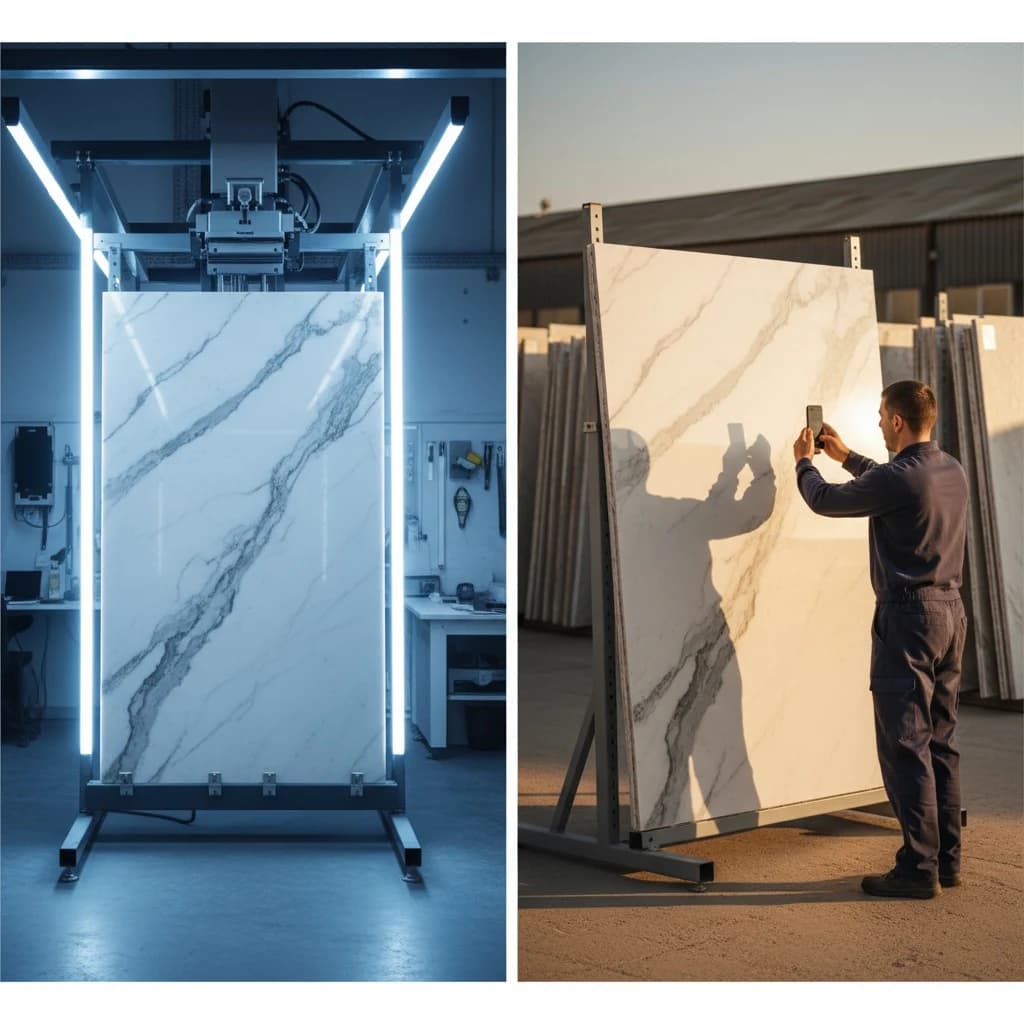
Bir sonraki levha tarayıcısını değerlendiren fabrikatörler için özet
Pro serisi bir iPhone (12 Pro veya üstü, LiDAR sensörlü) üzerinde çalışan mobil levha tarama uygulaması, envanter ve B2B ticaret için önem taşıyan her metrikte özel levha tarayıcılarıyla eşdeğer performans sergiliyor -- tek istisna, milimetrenin altındaki hassasiyet gerektiren kesim işlemleri. Üç yıllık perspektiften bakıldığında yaklaşık 5 kat daha uygun maliyetli olan mobil çözüm, kuyruk bekletilen sabit bir istasyona değil, slabın bulunduğu yere giderek tarama yapıyor ve tüm ekip üyelerinin birer tarayıcıya dönüşmesini sağlıyor -- tek bir uzmana olan bağımlılığı ortadan kaldırıyor. Özel tarayıcılar ise +/-1mm boyutsal hassasiyet gerektiren CNC kesim hazırlığı ve kitap açılımı eşleştirme işlemlerinde üstünlüğünü koruyor.
2026 yılında, taş fabrikasyon iş akışlarının büyük çoğunluğu için mobil, daha iyi bir varsayılan seçenektir. Geriye kalan soru şu: Alt milimetre hassasiyet gerektiren %20'lik tarama dilimi için özel donanıma da ihtiyaç duyuyor musunuz?
Bu yazı, iPhone taş envanter iş akışı makalemizin alıcı kılavuzu tamamlayıcısıdır -- iş akışı çerçevesi için o makaleyi, doğrudan karşılaştırmalı karar için bu makaleyi okuyun.
Mobil levha tarama uygulaması nedir?
Mobil levha tarama uygulaması, akıllı telefon veya tablette (neredeyse her zaman LiDAR sensörlü Pro serisi iPhone veya iPad Pro) çalışan ve tek bir el taramasıyla doğal taş levhanın 3B dijital ikizini oluşturan bir yazılımdır.
Tipik bir mobil levha taramasının çıktısı şunları içerir:
- Hacimsel ölçüler: uzunluk, genişlik, kalınlık, yüzey alanı, hacim
- RGB dokusuyla gömülü 3B mesh
- Levhaya yapıştırılan baskılı QR koduyla oluşturulmuş benzersiz levha tanımlayıcısı
- Meta veri: tarama zaman damgası, konum, operatör, aydınlatma koşulu
Tarama, gerçek zamanlı olarak merkezi envanter sistemine senkronize edilir; levha müşteri görüntüleme, B2B ticaret, konteyner planlaması ve aşağı yönlü fabrikasyon iş akışları için anında kullanılabilir hale gelir.
Özel levha tarayıcısı nedir?
Özel levha tarayıcısı, sabit konumlu ya da tekerlekli taşıyıcıya monte edilmiş donanım sistemidir ve şu bileşenleri bir araya getirir:
- Kontrollü aydınlatma bölmesi (genellikle parlak, renk doğruluğu yüksek LED dizileri)
- Bazen yapısal ışık veya lazer derinlik sensörleriyle eşleştirilen çoklu kameralar
- Bir iş istasyonunda çalışan tescilli işleme yazılımı
- Belirli zaman dilimlerinde tarama yapan eğitimli bir operatör
Bu kategorideki köklü tedarikçiler arasında Park Industries'in Slabsmith ürün serisi ve başkaları yer almaktadır. Sermaye yatırımı genellikle €15.000 ile €25.000 arasında seyreder; buna yıllık yazılım ve bakım ücretleri de eklenir.
5 boyutta karşılaştırma
1. Doğruluk
| Metrik | Özel tarayıcı | Mobil (iPhone Pro LiDAR) |
|---|---|---|
| Uzunluk / genişlik | +/-1mm | +/-2cm |
| Kalınlık | +/-1mm | +/-2cm |
| Yüzey alanı | +/-0,5% | +/-1-2% |
| Hacim | +/-1% | +/-2-3% |
| Renk (görünür spektrum) | Kalibreli, kontrollü aydınlatma | Ortam aydınlatması, gölgeli koşul gerektirir |
Envanter takibi, B2B ticaret fiyatlandırması ve müşteri görüntüleme için mobil doğruluk yeterlidir (iPhone LiDAR, gerçek levha tarama koşullarında yaklaşık +/-2cm doğruluk sunar). CNC kesim yolları ve +/-1mm boyutsal hassasiyetin ve Delta-E sub-1 renk eşleştirmesinin zorunlu olduğu kitap açılımı levha eşleştirmesi için özel tarayıcılar üstünlüğünü korumaktadır.
2. Levha başına işlem verimi
| İş akışı aşaması | Özel | Mobil |
|---|---|---|
| Levhanın tarama istasyonuna taşınması | 3 - 8 dakika | 0 (tarama yerinde yapılır) |
| Levha konumlandırma | 1 - 2 dakika | 5 - 10 saniye |
| Tarama | 1 - 3 dakika | 30 - 60 saniye |
| Operatör etiketleme ve inceleme | 30 - 60 saniye | 10 - 20 saniye |
| Levha başına toplam | 5 - 13 dakika | 1 - 2 dakika |
Mobilin asıl büyük kapasite avantajı taramanın kendisinden değil, başka bir yerden geliyor: taramalar normal elleçleme süreçlerinde yapılıyor -- sahaya gelen mallar, konteyner boşaltma, müşteri gösterimleri. Merkezi bir tarama istasyonu kuyruğu yok, çünkü istasyon yok.
Haftada 50 levha işleyen bir fabrikatör için mobil, haftada 4 - 9 saat taramayla ilgili iş gücü tasarrufu sağlar (50 levha, levha başına 8 dakikalık süre farkıyla çarpılır).
3. 3 yıl üzerinden toplam sahip olma maliyeti
| Maliyet kalemi | Özel | Mobil |
|---|---|---|
| Donanım | €15.000 - €25.000 (tek seferlik) | €1.199 (iPhone Pro, tek seferlik) |
| Yazılım / abonelik | Yılda €1.500 - €4.000 | Kullanıcı başına yılda €600 - €2.000 |
| Bakım / kalibrasyon | Yılda €500 - €2.000 | €0 (Apple tarafından yürütülür) |
| Eğitim | €1.500 (tek operatör) | Kullanıcı başına €200 - €500 |
| Alan / kurulum | Ayrılmış alan gerektirir | Gerekmez |
| 3 yıllık toplam (tek kullanıcı) | €23.000 - €43.000 | €4.000 - €9.000 |
Tek kullanıcı için mobil, 3 yılda yaklaşık 5 kat daha uygun maliyetlidir. Bu fark, kullanıcı sayısı arttıkça daha da açılır; çünkü her operatör ayrı bir özel tarayıcı değil, bir iPhone (veya vardiyalar arasında paylaşılan bir cihaz) kullanır.
"Donanım maliyet farkı önemli bir başlık, ancak asıl dönüştürücü etki yapısaldadır: tarayıcıya göre program yapmayı bırakıp işe göre taramaya başlıyorsunuz. Bu, hangi işlerin hiç kataloglanacağını değiştiriyor."
Maria Konstantinou, CTO, Noria Strata
4. İş akışı entegrasyonu
Özel tarayıcı sabit bir darboğaz yaratır. Levhalar tarama istasyonunda sıraya girer ve belirli zaman dilimlerinde toplu olarak işlenir. Bu yaklaşım, hacim düşük ve öngörülebilir olduğunda işe yarar. Ancak şu koşullarda çöker:
- Bir konteyner geldiğinde ve müşteri görüntüleme için 30 levhanın anında kataloglanması gerektiğinde
- Bir müşteri showroomdayken tam o an mevcut olan levhaları görmek istediğinde
- Birden fazla ekip paralel çalışırken ve tarama istasyonu ortak bağımlılık noktası haline geldiğinde
Mobil levha tarama uygulaması darboğazı ortadan kaldırır. iPhone'u olan her ekip üyesi, her yerde, 30 - 60 saniyede herhangi bir levhayı tarar. Veri buluta senkronize olur ve saniyeler içinde müşteri portalında görünür.
Mobilin belirleyici biçimde öne çıktığı üç iş akışı entegrasyon noktası:
- Konteyner boşaltma. Kataloglama, levhalar boşaltılırken gerçekleşir -- sonrasında değil.
- Müşteri görüntüleme envanteri. Müşteriler, dünün toplu güncellemesini değil, saniyelik gecikmeyle mevcut stoku görür.
- Tedarikçi ve müşteri anlaşmazlıkları. Her levhanın kabulden itibaren kesin bir hacimsel kaydı bulunur. Anlaşmazlıklar belleğe değil, veriye dayanılarak çözülür.
5. Esneklik ve operasyonel risk
| Risk | Özel | Mobil |
|---|---|---|
| Donanım arızası | Tek hata noktası (tek makine) | Dağıtık (çoklu cihaz) |
| Aydınlatma / güç bağımlılığı | Kontrollü aydınlatma ve şebeke gücü gerektirir | Pil ile çalışır, ortam aydınlatması yeterlidir |
| Yazılım tedarikçisi bağımlılığı | Yüksek (tescilli dosya formatları) | Düşük (açık tarama formatları, bulut senkronizasyonu) |
| Yenileme süresi | Haftalar - aylar (uzman donanım) | Saatler (herhangi bir Apple Store) |
| Sigorta / hırsızlık riski | Düşük (sabit kurulum) | Daha yüksek (taşınabilir cihaz) |
Güvenilirlik profili evrensel olarak üstün ya da düşük değil, farklıdır. Özel donanımın kaybolması veya çalınması daha zordur ancak değiştirilmesi daha yavaştır. Mobil, tekil cihaz arızasına karşı daha dayanıklıdır; ancak küçük bir taşınabilir varlık riski taşır.
Özel tarayıcıların hâlâ doğru cevap olduğu durumlar
Mobil evrensel bir ikame değildir. Özel tarayıcıların daha iyi araç olmaya devam ettiği üç iş akışı vardır:
1. CNC kesim yolu oluşturma. Bir levha, müşteri tarafından sağlanan şablona +/-1mm toleransla işlenecekse, kesim yolu için milimetrenin altında boyutsal kayıt gerekir. Mobil LiDAR henüz bu hassasiyet düzeyine ulaşmamıştır.
2. Kitap açılımı levha eşleştirme. Aynı bloktan bitişik levhaları Delta-E sub-1 renk eşikleriyle eşleştirmek, ortam aydınlatmasıyla el taramasının karşılayamayacağı kalibreli kontrollü aydınlatma ve yüksek çözünürlüklü görüntüleme gerektirir.
3. Anlaşmazlıklara yönelik belgeleme. Yüksek değerli bir levha hasar gördüğünde ya da itiraz konusu olduğunda, tam geçmiş kaydına ve kalibreli ölçümlere sahip özel bir tarama, ticari anlaşmazlık çözümünde daha savunulabilir kanıt sunar.
Fabrikatörlerin çoğu için doğru cevap hibrit bir yaklaşımdır: kabul ve müşteri görüntüleme iş akışlarının %80'i için mobil levha tarama uygulaması, kesim hazırlığı ve anlaşmazlık belgeleme vakalarının %20'si için özel tarayıcı.
Karar matrisi
Hangi aracın hangi iş akışına uyduğunu belirlemek için bu matrisi kullanın. Bir satırda birden fazla "evet" cevabı mobilin lehine; birden fazla "hayır" ise özel tarayıcının lehine işaret eder.
| Soru | Cevap evetse |
|---|---|
| Haftada 20'den fazla levha tarıyor musunuz? | Mobil daha fazla zaman kazandırır |
| Müşteriler gerçek zamanlı envanter bekliyor mu? | Mobil saniyeler içinde senkronize olur |
| Birden fazla lokasyonda faaliyet gösteriyor musunuz? | Mobil her yere taşınır |
| Uzak sahalarda veya tedarikçi tesislerinde konteyner işliyor musunuz? | Mobil orada da çalışır |
| +/-1mm toleransla müşteri şablonuna göre kesim yapıyor musunuz? | Kesim hazırlığı için özel ekipman ekleyin |
| Üst segment işler için kitap açılımı eşleştirme yapıyor musunuz? | Renk/eşleştirme için özel ekipman ekleyin |
| Sıfırdan mı başlıyorsunuz (mevcut tarayıcınız yok)? | 2026'da başlangıç noktası olarak mobil öncelikli yaklaşım mantıklıdır |
| Zaten özel tarayıcınız var mı? | Kesim için elinizde tutun; envanter için mobil ekleyin |
Mobil levha tarama uygulaması nasıl değerlendirilir?
Mobil levha tarama uygulamaları arasında seçim yapıyorsanız, her satıcıya sorulması gereken sorular şunlardır:
Senkronizasyon mimarisi:
- Uygulama taramaları gerçek zamanlı bulut veritabanına senkronize mi ediyor, yoksa cihazda yerel olarak mı depoluyor?
- Tarama sırasında telefon bağlantısı kesilirse ne olur?
- Bir tarama müşteri portalında ne kadar sürede görünür?
Doğruluk ve kalibrasyon:
- Tipik levha tarama mesafelerinde belgelenmiş boyutsal doğruluk nedir?
- Uygulama her taramadan önce LiDAR sensörü kalibre mi ediyor, yoksa fabrika kalibrasyonunu varsayarak mı devam ediyor?
- Koyu veya yüksek parlaklıklı yüzeyleri nasıl işliyor?
İş akışı kapsamı:
- Yalnızca levha sahasını mı kapsıyor, yoksa yukarı yönlü (taşocağı, tedarikçi, konteyner) ve aşağı yönlü (müşteri portalı, fabrikasyon devir teslimi) süreçleri de kapsıyor mu?
- Kitap açılımı eşleştirme, renk profilleri ve anlaşmazlık belgeleme gibi işlemleri de destekliyor mu, yoksa yalnızca boyutları mı ölçüyor?
- Halihazırda kullanılan sipariş, teklif ve müşteri portalı sistemleriyle entegre olabiliyor mu?
Operasyonel uyumluluk:
- Bir operatörün eğitimi ne kadar sürer?
- Birden fazla operatör çakışma ya da kuyruk olmadan paralel olarak tarama yapabilir mi?
- Bağlantının zayıf olduğu sahalar için çevrimdışı mod nasıl çalışıyor?
Sık sorulan sorular
Mobil levha tarama uygulaması B2B taş ticareti için yeterince doğru mu?
Envanter ve fiyatlandırma için evet. Pro serisi iPhone LiDAR, tipik levha tarama mesafelerinde +/-2cm hassasiyet sunuyor; bu değer, çoğu B2B taş ticaret sözleşmesinin kullandığı +/-10mm toleransın oldukça içinde. Levha boyutlarına dayalı hacimsel fiyatlandırma için mobil yeterlidir. Milimetrenin altında kesim yolları için değildir.
Telefon kaybolur veya çalınırsa taramalara ne olur?
Doğru mimariye sahip bir mobil levha tarama sisteminde taramalar yakalandıkça buluta senkronize edilir. Cihazın kaybolması veriyi kaybettirmez. Tarama geçmişi, doğru kimlik bilgilerine sahip herhangi bir cihazdan erişilebilir halde kalır; kaybolan cihaz ise standart mobil cihaz yönetimi aracılığıyla uzaktan silinebilir.
Birden fazla operatör aynı anda tarama yapabilir mi?
Evet. Bu, mobilin yapısal avantajlarından biridir. Özel bir tarayıcı, paylaşılan tek bir kaynaktır. Mobil levha tarama sistemi ise her operatöre kendi tarama cihazını verir. Üç operatör, her biri kendi bölgesinde çalışarak 30 levhadan oluşan bir konteyneri eş zamanlı tarayabilir.
Tarama sırasında iPhone pili ne kadar dayanıyor?
Sürekli LiDAR taraması yapan tipik bir iPhone 15 Pro, saatte yaklaşık %15 - 25 pil tüketir. Aralıklı taramanın yapıldığı tam bir vardiyada (8 saatlik iş günü boyunca 50 - 80 tarama) pil genellikle %30 - 50 oranında azalır. Yoğun kabul günlerinde levha sahasındaki USB-C şarj kabloları veya küçük bir taşınabilir şarj cihazı, iş akışı kesintiye uğramadan bu sorunu çözer.
Uygulama çevrimdışı çalışıyor mu?
Üretim kalitesindeki mobil levha tarama uygulamalarının büyük çoğunluğu, ertelenmiş senkronizasyonlu çevrimdışı taramayı destekler. Taramalar yerel depolamaya kaydedilir ve bağlantı yeniden sağlandığında buluta aktarılır. Bu özellik, mobil kapsamanın yetersiz olduğu taş sahaları ve taşocağı alanları için kritik önem taşımaktadır.
iPhone LiDAR özel tarayıcıların tamamen yerini alacak mı?
Envanter, B2B ticaret ve müşteri görüntüleme iş akışlarında muhtemelen önümüzdeki 2 - 3 yıl içinde. CNC kesim hazırlığı, kitap açılımı eşleştirme ve adli nitelikte belgeleme gerektiren işler için hayır -- özel donanım, milimetrenin altında hassasiyet gerektiren %20'lik iş akışı dilimi için doğru araç olmaya devam edecek.
NoriaStrata olarak neler sunuyoruz?
NoriaStrata'nın levha envanter modülü, iPhone Pro ve iPad Pro cihazlardaki mobil levha tarama uygulaması üzerine sıfırdan inşa edilmiştir. Platform; tarama, benzersiz levha kimliği, envanter senkronizasyonu, müşteri portalı ve taşocağından fabrikatöre uzanan tedarik zinciri ticaret akışını tek bir bütünleşik sistemde yönetir.
Platformu şekillendiren üç ilke:
- Varsayılan olarak gerçek zamanlı bulut senkronizasyonu. Her tarama, gece toplu güncellemesiyle değil, saniyeler içinde müşteri portalına ulaşacak biçimde tasarlanmıştır.
- Açık tarama formatları. Taramalar, herhangi bir aşağı yönlü kullanım için dışa aktarılabilen ve gömülü RGB içeren standart 3B mesh formatında saklanır.
- Çok operatörlü paralel tarama. Birden fazla cihaz üzerinde birden fazla operatör, çakışma veya kuyruk olmadan paralel bölgelerde çalışır.
Bir taş fabrikası, distribütör veya B2B ticaret operasyonu için mobil levha tarama uygulamalarını değerlendiriyorsanız, NoriaStrata levha envanter modülü sunduğumuz platformdur.